
Cannabis Light in Italy: 2021 Update on the Italian Legislative Situation – Part 1/2
A few months ago, in June 2020, we published an article that summed up the 2020 legislative situation regarding the market and industry of legal hemp. The article was actually scheduled for February, but we decided to give space to Canapa Mundi 2020, thinking of publishing the piece on the legislative status of the Italian green industry in March. Instead, COVID arrived, and everything stopped in a planetary lockdown—let alone our blog.
And so the February 2020 article was postponed to June; we wanted to publish it anyway because it announced major legislative changes, those of the 2020 Budget Law that came into effect on January 1, 2020. The 2020 Budget Law follows the line of the historic ruling by the Court of Cassation from the previous summer, which established that if the 0.5% THC threshold does not produce psychotropic effects, then hemp has no “droning efficacy” and is therefore not a narcotic. Consequently, the sale of cannabis light and derived products is lawful and legal. And the Budget Law confirms this, silencing all doubts and controversies, and states that the sale of legal cannabis and its derivatives with THC content within legal limits (0.5%) is legal.
In fact, it wasn’t that the parliamentarians had made much effort, to the point that in the first draft of the law, the entire issue of the commercialization of inflorescences and derived products from light hemp plants had been completely forgotten. But the 2020 Budget Law, also called MilleDeroghe due to the countless derogations integrated into the law by various parliamentary groups, manages to include a derogation in favor of the light cannabis industry. The derogation, proposed by a group of parliamentarians from the 5 Star Movement led by the honorable Mantero, inserts into the Budget Law a taxation system for legal hemp products, which effectively authorizes their commercialization.
Don’t celebrate too soon. A few weeks later, on January 23, 2020, the Chamber’s Constitutional Affairs and Budget Committee deemed over 900 amendments to the MilleDeroghe inadmissible, including the one related to the trade and use of cannabis light. The legal hemp amendment was declared, like all the other hundreds of rejected amendments, “not strictly relevant to the matter.”
Meanwhile, on December 19, 2019, the Court of Cassation had ruled in favor of the fact that home cultivation of cannabis, even “with narcotic effects,” but if done on an amateur, domestic basis, in limited quantities, and for personal use, does not constitute a criminal offense. A major step forward for anti-prohibitionist movements, coming just a couple of weeks after the announcement that the UN Narcotics Commission decided to remove therapeutic cannabis from the list of dangerous drugs, officially recognizing its medical properties instead.
Big step? Maybe… In fact, as you can see from the legal details of the ruling by following the link, in the case discussed by the Court of Cassation, the criminal complaint was dismissed, but the administrative sanction remained—the one provided for by the famous Article 75 of DPR 309/1990, which considers the “possession of narcotic substances intended exclusively for personal use, even if obtained through lawful home cultivation,” as punishable. It should be noted that the consequences of an Article 75 sanction can be severe, potentially leading to the suspension of the driver’s license and a subsequent process to recover the permanent license through analyses, drug tests, and medical visits to be conducted at the Medical Commission for a minimum period of 8 years.
But let’s return to the 2020 Budget Law, which, in the spirit of “opening” of the Cassation, had established that the commercialization of legal hemp products, including inflorescences, was no longer a crime. Something that had never been a crime since Law 242 of 2016. Then it reconsidered, not defining the parameters for commercialization, creating confusion and fueling even more doubts spread at the popular level by the Italian prohibitionist right. In November 2020, the 5 Star Movement parliamentarians tried again to present the amendment, this time attempting to include it in the Ristori Decree, but once again with scant results, as reported by one of our favorite sector magazines, BeLeaf magazine.
Going back to the beginning of 2020, we no longer knew what to think. And we still didn’t know that within a few weeks, the COVID-19 pandemic would force us into the first lockdowns in March 2020. It seems the COVID lockdowns haven’t hurt the cannabis industry; on the contrary… despite being forced to keep shops and businesses closed, it seems the Italian cannabis e-commerce industry has seen record numbers, with rumors of at least a 300% increase in turnover for our digital hemp dealers. Newspapers and TV news programs have been reminding us of this for months.
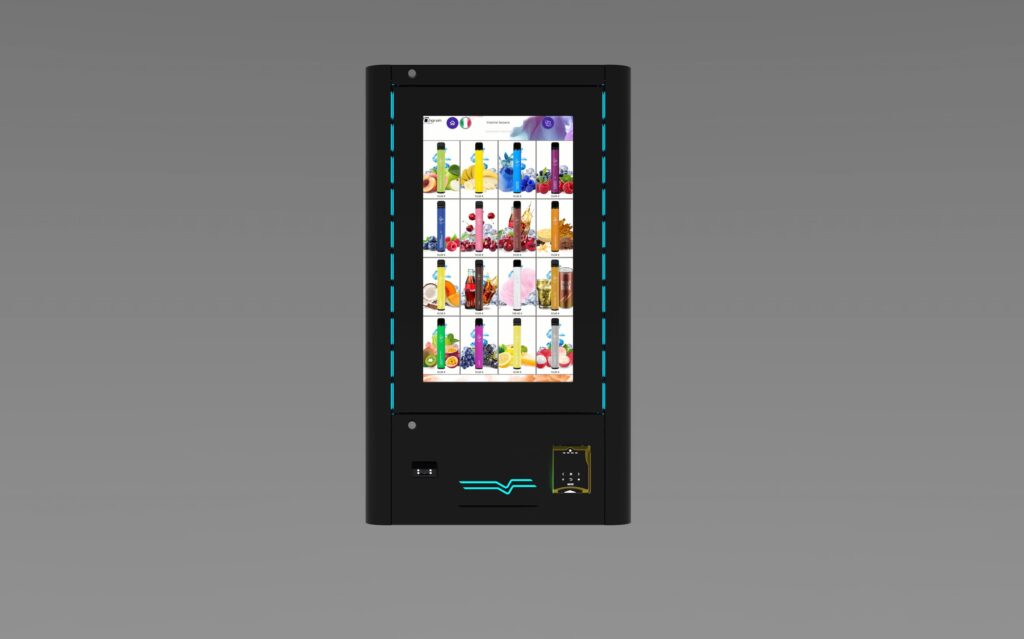
But could it be true? Certainly for some of the bigger companies, which were also able to rely on sales from legal cannabis vending machines present in all the showcases of their cannabis shops across Italy. And it’s probably true for the months of “hard lockdown” in March-April-May 2020. Once people were back on the streets again, even with social distancing and many new rules, they resumed going out, and e-commerce returned to its usual levels. It’s worth adding that those who couldn’t rely on open physical stores during lockdown and had to depend solely on the web channel faced other “pleasant surprises” in 2020—a whole series of obstacles to the promotion and commercialization of legal hemp. In fact, the trend had started with cannabis industry bans by Google, which prohibits the use of its paid advertising platform for cannabis products, even legal ones, and even in countries where it has been legalized.
Following this, throughout 2019 but with greater rigidity in 2020, the censorships of Facebook and Instagram began to block accounts from the cannabis world, including those of legal cannabis. In reality, the “trick” to avoid being blocked is simple: never post “close-ups” of inflorescences or packaged products that clearly contain cannabis, never talk about prices or stores, and above all, never post the physical address of the store or tag the location of “cannabis”-related photos. The line is thin; it takes little to make a blunder, perhaps with an unwelcome #hashtag, and see months or years of work developed with social media communities go up in smoke.
In 2020, however, the heaviest blow to the e-commerce of the light cannabis world was the banking one. Practically all the major online payment systems, the backbone of any e-commerce setup, have placed the cannabis world on their “blacklist.” We’re talking about blocks on legal cannabis e-commerce by PayPal, Stripe, Amazon Pay, and subsequently even Italian providers like Banca Sella. Within a couple of months at the start of 2020, all banking payment accounts and related e-commerce systems were frozen, and sometimes even the funds in the accounts (as in the case of PayPal, which blocked funds for 180 days).
Some Italian and European cannabis sites continue to operate with their PayPal or Stripe platforms, but it’s only a matter of time before, at one of the next “random” checks, these accounts too risk being blocked. Do you really think that under these conditions the Italian cannabis industry grew by 300%?
Lockdown ends, and problems for the Italian legal cannabis industry start up again. And it’s all due to the usual mess-ups and incompetence of the politicians in charge. We had all applauded the 2020 Budget Law, but in reality, the law created more confusion than anything else. It “seems” that, given the absence of a “narcotic effect,” CBD can no longer be prosecuted as a drug. Instead, right at the “reopening” after lockdown, police raids resumed all over Italy on legal cannabis shops and agricultural businesses. With fines, seizures, and criminal charges. And this is because, over 3 years after Law 242/2016—which was supposed to regulate the cultivation and market of cannabis for industrial and therapeutic use—there is still no clear legislative framework that makes the commercialization and consumption of legal cannabis inflorescences possible. In addition to the “omissions” of the 2020 Budget Law, there are many other “gray areas” in regulations on unregulated aspects, or rigidly regulated ones, which caused the wave of seizures and charges in 2020. It wasn’t enough that producers and legal cannabis brands highlighted on packaging—especially for inflorescences—that “the product is intended as a collectible item.” It’s a bit ridiculous, because collectible products are generally items preserved over time, whereas legal hemp inflorescences, even sealed in their containers, won’t retain their properties for more than a few months, maximum a year… a bit like deciding to become collectors of bananas or cut garden flowers.
Among the “nitpicking” issues often at the center of the 2020 seizures of entire productions, greenhouses, and legal cannabis shops are those related to the origin of the cultivated seeds, which must be strictly of Italian provenance and genetics. Or regarding the infamous 0.5% THC content, with cases of seizure of an entire production that complied with legal limits because, at the bottom of the greenhouse, a few dozen plants were found on whose genetics work was being done to “bring them within legal limits,” but which at analysis were still at… 0.6-0.7%. This when a plant with mild narcotic-effect THC content generally has at least 10% THC, 15% when “the weed is good,” and 20/max 25% THC in super genetics from California or Dutch labs. Someone explain to the Italian legislator that if at 0.5% there is no narcotic efficacy, certainly at 0.7-0.8% or even 1% legal hemp remains a natural product with many benefits, but certainly not including “getting high.”greenkarmacbd+1
Other nitpicking issues that led to seizures and charges? For example, the fact that some cannabis stores and grow shops display legal hemp inflorescences in glass jars, allowing customers to see the inflorescences and smell their fragrances before purchase. This has been at the center of product seizures because apparently, it’s not possible to be certain that the inflorescences presented in the jar are the same as those declared in the laboratory analyses, which could instead be replaced with cannabis with “narcotic efficacy,” so in the meantime, everything is seized for laboratory analysis. If it goes well, after negative test results, it could take more than six months to get the seized products back. By then, the inflorescences will be dry and dehydrated, having lost some of their beneficial properties and terpene aromas, and certainly not products to put back on sale.
Other fines and seizures, this time on the production side of legal hemp, were justified by the fact that, although the fined companies cultivated their light hemp genetics in compliance with legal parameters, the cultivated plants had not been obtained from the seeds provided for by law—those of approved genetics such as Carmagnola, Eletta Campana, Villanova, and Kompolt, among others.semicollezione+1
Another “blow” was dealt to the grow shop sector.semicollezione with the ruling of the Court of Cassation last September 17, 2020, according to which”it is recognizable in the conduct of those who market cannabis seeds, accompanying them with a cultivation manual, an ideological and programmatic link suitable to unequivocally attribute to the seller the activity of commercializing the seeds and the concurrent externalization of a message addressed to the buyers of the product, in terms of incitement to commit offenses.“(Court of Cassation, Criminal Section IV, ruling September 17, 2020, n. 26157) – that is,” selling cannabis seeds associated with a cultivation manual is incitement to commit a crime.
2020 was so full of plot twists for the Italian legal cannabis industry that there’s actually still plenty more to say. To the point that we have to cut this article short here to schedule you for next week with the concluding part of our report, featuring a 2021 update on the Italian regulatory situation in the sector.
In the meantime, continue following our blog and Harvin’s social media updates on Facebook, Instagram, and YouTube, and contact the Harvin team if you’re interested in our line of legal cannabis vending machines.