
Cannabis Light in Italy: 2021 Update on the Italian Legislative Situation – Part 2/2
This is the second part of the article started last week, which we suggest you read before this one in order to have a complete overview of what has happened in the Italian legal‑cannabis world throughout 2020 and up to today (February 2021).
In the first part of our article we have analyzed all the hopes and frustrations that arose from the Budget Law 2020, we reported the adventures of the Court of Cassation, which in recent months has contributed to the general confusion with alternating value sentences for the legal hemp sector, and we have taken stock of how the gaps in the legislation on the matter have led to a new season of fines and seizures for industry operators, and how the internet world has further affected companies in the sector with censorship and bans from Google, Facebook, Instagram, PayPal, Stripe, Amazon, Banca Sella and other e-commerce giants.
We concluded the first part of the article by recalling the latest blow dealt to grow shops by the Court of Cassation, which with a ruling of September 2020 (Corte di Cassazione Penale, Sezione IV, sentenza 17 settembre 2020, n. 26157) established that selling cannabis seeds together with a cultivation manual constitutes incitement to commit a crime.
2020 was so negative that it could not end without a final blow to the legal‑cannabis industry, and again from the institutional and political side. In late October 2020, in fact, a decree issued by Minister of Health Speranza, in open contrast with existing legislation, included “oral‑administration preparations of cannabidiol obtained from cannabis extracts” in the list of “medicines based on narcotic active substances.” The news shocked the entire Italian light‑cannabis industry, as well as the Italian left‑wing political sphere.
The reason behind Minister Speranza’s choices, as reported by an article in the newspaper La Stampa, was simple. In June 2018, the first cannabidiol‑based drug obtained from medicinal cannabis was approved for the American market, authorized for the treatment of two forms of drug‑resistant epilepsy. In June 2019 the EMA (European Medicines Agency) also gave the green light for its marketing in Europe, and the drug was expected to arrive in Italy shortly after.cannabisterapeutica+1
Interpreting the decree in the most restrictive way, all CBD‑based products become illegal and cannot be produced or sold unless first approved as a drug by AIFA (Italian Medicines Agency). This interpretation would have implied that, on the production side, only pharmaceutical companies should be authorized, and, on the sales side, only pharmacists—with all the necessary specializations, authorizations, and licences.
There were many comments on this latest bad news for the Italian legal‑cannabis industry; a legality that is being destroyed bit by bit, while a business worth over 150 million euros is being put at risk, along with youth employment and the development of the green economy. But do not worry: after just 10 days, Minister Speranza reversed his decision and suspended the decree that had sent the sector into panic.
Among the main criticisms raised by the decree, one stands out from Luca Marola, the creator of the EasyJoint brand, who points out in the cited article that the strict application of Minister Speranza’s decree “leaves the prosecutors free to act; the most intransigent ones could shut down stores and in any case send the whole market into crisis.” Taking advantage of the occasion, Marola also highlighted another point to the detriment of Italy’s legal‑cannabis industry, which many had not noticed.
Marola criticized the decision of the head of the Agenzia delle Dogane e dei Monopli, who, again in October 2020, introduced a new requirement for shop owners: an owner’s self‑declaration in which they promise not to sell products derived from hemp, on pain of being denied authorization. In practice, the Monopoli requested that neighborhood shops, pharmacies, and parapharmacies that sell or intend to sell to the public “inhalable products without combustion, consisting of liquid substances, with or without nicotine” must self‑certify their commitment not to commercialize or hold leaves, flowers, oils, resins, or other products containing substances derived from Cannabis sativa. In the absence of the shop owner’s self‑certification of their commitment not to sell illegal products, authorizations and renewals cannot be granted.
The State Monopoli measure refers to the opinion of the Consiglio Superiore di Sanità, according to which “the potential danger of products containing or consisting of cannabis flowers cannot be excluded, regardless of the delta‑9‑tetrahydrocannabinol percentage content.” It should be noted that both the Monopoli decree and the Consiglio Superiore di Sanità opinion run counter to the World Health Organization’s guidelines, which as early as 2018 removed CBD from the list of narcotic and psychotropic drugs. The WHO’s position has also been adopted by the UN, which in December 2020 (often cited as “2021” in subsequent commentary) finally removed cannabis from the list of particularly harmful substances and instead recognized its medical properties.corriere+2
The first effect of the measure adopted by the Monopoli was the decision by many tobacconists to stop selling legal‑cannabis products, a choice supported by a widespread confusion created by FIT, the Federazione Italiana Tabaccai, which brings together about 80% of the more than 50,000 Italian tobacconists. FIT contributed to creating confusion among shop owners by announcing sanctions for those who sell legal‑cannabis products, as happened in Trentino at the end of 2019, or by inviting them to suspend sales of light hemp and its derivatives while waiting for the final decisions of the Cassazione, as reported in the article signed by the FIT President and published in the Federation’s magazine, La Voce del Tabaccaio.fanpage+2
But the Federation probably is not listening to the real voices of the tobacconists; in fact many of them hold a different opinion. In July 2020 a group of over 700 Italian tobacconists in fact carried out an action by publishing an “open letter to FIT,” putting forward several requests for protection of the category relating to various types of products and services offered by tobacconists. The list includes a point dedicated to “Canapa Sativa,” which literally reads: Regarding the sale of hemp sativa (so‑called cannabis light), we ask that FIT pay maximum attention to the issue. If there should be a regularization of the sector, we request that the exclusive right of sale be granted to us. We do not want to let slip yet another business, as happened with e‑cigarettes. “Here is the link to the open letter issued by the group of tobacconists, found thanks to an article in another of our favorite sector magazines, DolceVita.”
The reason behind the certification measure adopted by the Monopoli, however, is clear. It is not a war against the legal‑cannabis market, but rather a strategy to capture it, as also echoed by the tobacconists in the open letter. In fact, just in those days the Director of the Monopoli had officially presented the fiscal‑policy goals for 2020–2022 to the Senate Finance Commission, and had not missed the chance to emphasize that the entire light‑cannabis sector needs stricter regulation across the whole supply chain and that it should be brought under the management of the Monopoli. If you are interested in exploring the topic further, I invite you to read an article from last November that, analyzing the Monopoli’s position on legal cannabis, is titled “La lunga mano dei Monopoli sulla cannabis light.”
So many bad-news stories, and yet the summer of 2020 brought another breath of hope to Italy’s legal‑hemp industry, when the Ministry of Agricultural, Food and Forestry Policies (MIPAAF), with a decree of 23 July 2020, listed “Cannabis sativa inflorescence” for extractive uses among the official “medicinal plants,” also setting the maximum unit price for calculating insurable values on the facilitated market and for access to the 2020 mutualisation funds. This decree is significant because narcotic substances are excluded from the category of medicinal plants, so the MIPAAF’s inclusion of legal‑cannabis flowers among medicinal plants in practice underlines that the plant is not a narcotic substance.
It follows that legal hemp can be cultivated and processed (if coming from certified varieties with THC content as provided by law) not only for the purposes listed in Law 242/2016 (including food, cosmetics, semi‑processed goods, bio‑building materials), but also as a medicinal plant as provided by Legislative Decree 75/2018, opening the door to a market for essential oils, terpenes and other extracts from legally produced and sold light‑cannabis flowers. But above all, as the linked article concludes, Cannabis sativa is finally included in an agricultural‑policy document together with other products such as wine, wheat, fruit and vegetables, affirming a key point of the issue: Cannabis sativa is an agricultural product and a medicinal plant with undisputed benefits, not a drug.
Our journey through the events of the 2020 hemp world ends on a positive note, and sends an important signal to the legal‑hemp industry. While the “ordinary mortals” of the legal‑cannabis industry had to slalom between decrees, court rulings, and, for those who were unlucky, fines or seizures, there were also Italian companies that took a real leap forward in terms of communication and market positioning.
This is the case of the Milan‑based company JustMary, which decided to make a strong investment in the sports sector, becoming the official sponsor of three Serie A football teams (Sampdoria, Udinese and Hellas Verona) and of a couple of basketball teams, starting with Messina and the women’s basketball team from Capri. Somehow I think we have found out who recorded 300% revenue growth during the lockdown…
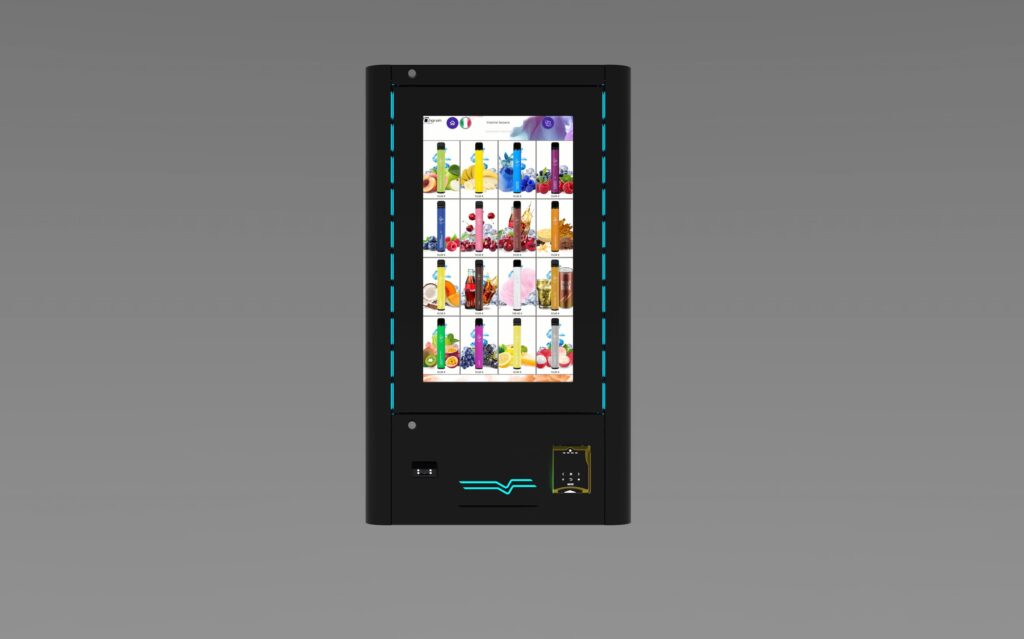
In conclusion to this long account, started last week: those who invested in and believed in the light‑hemp sector, like us at Harvin with our legal‑cannabis vending machines, and above all the hundreds of agricultural and trading entrepreneurs who are the heart of the green industry, certainly had a 2020 full of anxiety, and not only because of covid. The legal roller coaster, shifting interpretations swinging between one fine and the next, and the uncertainty that reigned in the sector, combined with the economic difficulties caused by the pandemic crisis, led many companies—which at the 2019 hemp fairs seemed to be promising—to close down. A real pity.
At Harvin we lost several customers, but we believed in the light‑hemp market and we held on, also supporting the resilience of those clients who, like us, faced the storm knowing that sooner or later the good weather would come. We have seen companies in the sector grow, and we supported their growth thanks to legal‑cannabis vending machines, which during lockdowns and closures due to “traffic‑light” rules—apart from e‑commerce channels—turned out to be, if not the only, at least the main source of revenue for many of our customers.
In short, despite the many difficulties and political and legislative uncertainties so typical of our Bel Paese, we remain optimistic about the future growth of the Italian legal‑cannabis market.
If you also share our optimism and are planning to expand your business horizons, contact the Harvin team: we will be happy to support your growth with our range of legal‑cannabis vending machines and CBD products. Do not forget to follow the articles on our blog and our updates on Facebook, Instagram, and YouTube.